
Minnesota Marriage Records
Minnesota marriage records are public documents kept by county recorders across all 87 counties. You can search them online using MOMS, the Minnesota Official Marriage System, or contact any county recorder directly to request a certified copy of a marriage certificate. Each county holds its own records, so the right place to search depends on where the license was issued. This guide explains how the system works, what records are available, and how to find Minnesota marriage records whether you need a recent certificate or a historical document.
Minnesota Marriage Records Overview
How Minnesota Marriage Records Work
Minnesota does not have a central marriage registry. Each of the 87 counties keeps its own marriage records. When a couple gets a license, the county recorder issues it and files the record locally. After the ceremony, the officiant sends the signed certificate back to the county. That document stays with the county recorder and becomes the permanent marriage record. If you need a copy, you go to the county that issued the license.
The state does provide a statewide index called MOMS, the Minnesota Official Marriage System. MOMS is a voluntary program run by the Minnesota Association of County Officers. All 87 Minnesota counties participate and contribute their records. The index covers marriages from 1850 to the present, though coverage varies by county. You can search MOMS to find out which county holds a specific marriage record, then contact that county for a certified copy. The database is free to search and open to the public per Minnesota Statutes Chapters 13 and 517.
The MOMS homepage is the primary place to start any marriage records search in Minnesota.
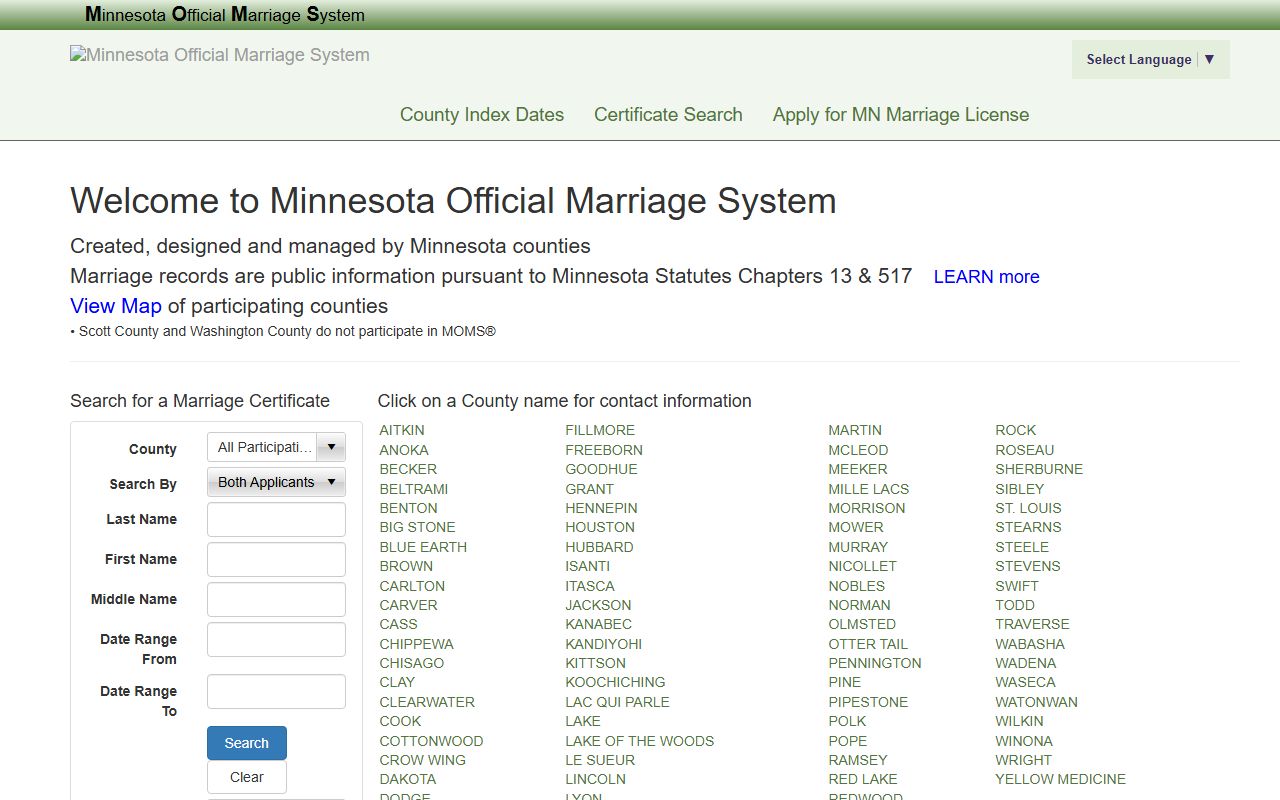
MOMS lets you search by name, date range, or both. Results show the county that holds the record, the names of both applicants, and the date of the marriage. Note: the system labels parties as Applicant 1 and Applicant 2 for records after August 1, 2013. Records before that date use Groom and Bride designations.
Certified copies of Minnesota marriage records cost $9 at most county recorder offices. That fee is standard across most counties, though a few charge slightly more. Certified copies carry the county seal and are accepted for legal purposes like name changes, passport applications, and insurance claims. Plain informational copies cost less but don't carry the seal.
Search Minnesota Marriage Records Online
MOMS is the best online tool for searching Minnesota marriage records. The search page at moms.mn.gov/Search lets you narrow results by county, name, date range, or a combination. You can choose exact match, Soundex (for phonetic name variations), or wildcard search. Searching statewide is useful when you don't know which county issued the license.
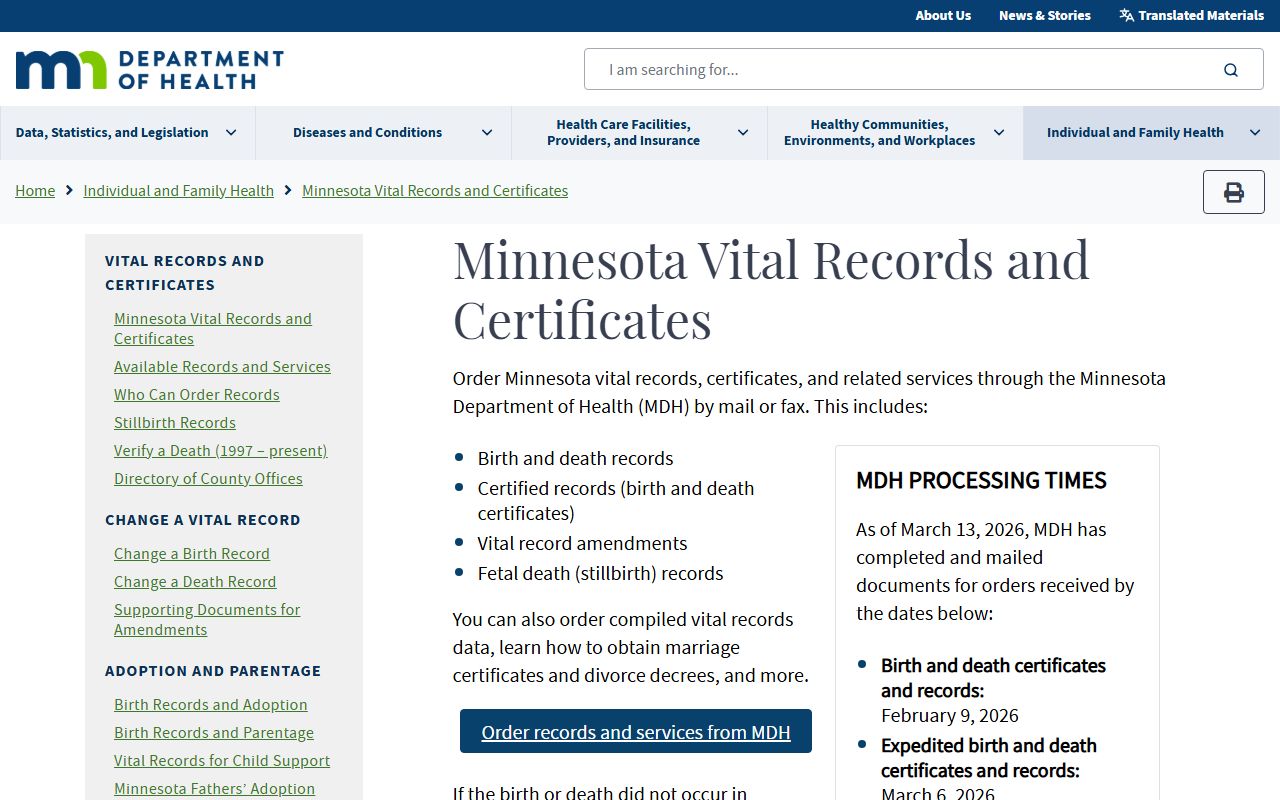
The Minnesota Department of Health does not record marriages or divorces. MDH handles birth and death records only. However, the MDH vital records page explains the full landscape of Minnesota vital records and points you to the right resources for marriage records.
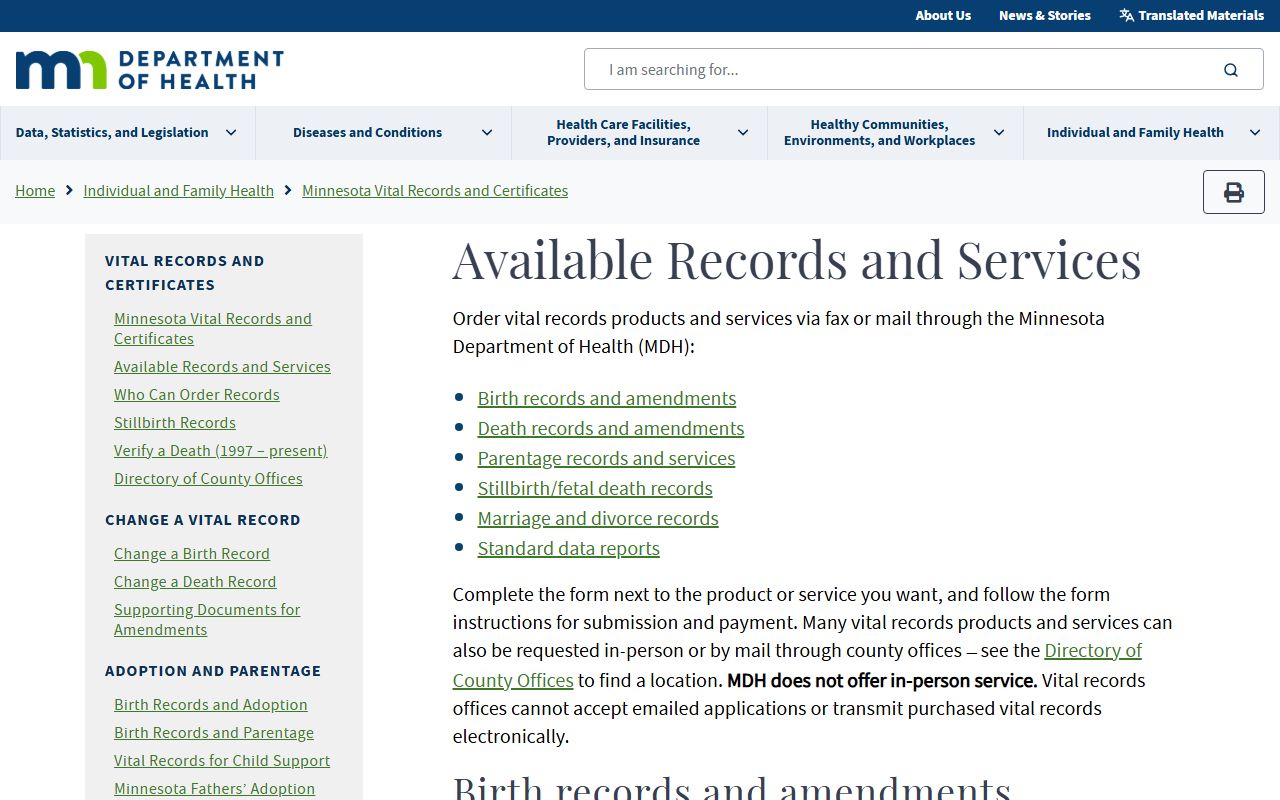
MDH is clear that for marriage records you must contact the county that issued the license. Their vital records office is mail and fax only, and it does not have marriage record copies. The MOMS system or the county recorder is your correct path for any marriage record in Minnesota.
The Minnesota Historical Society also maintains a marriage records research guide that covers historical records going back to 1850. For genealogy research or old records that may not be in MOMS, the MNHS guide is a useful starting point. The Society holds territorial marriage records from 1843 to 1849 and records from 1858 in its State Archives collection.
Minnesota Marriage License Requirements
Both applicants must appear in person at the county recorder's office. You cannot apply by mail or send a representative. Each person must bring a valid photo ID such as a driver's license, state ID, or passport. Social Security numbers are required by law, though they do not appear on the license itself. The law governing marriage license applications is Minnesota Statute 517.08.
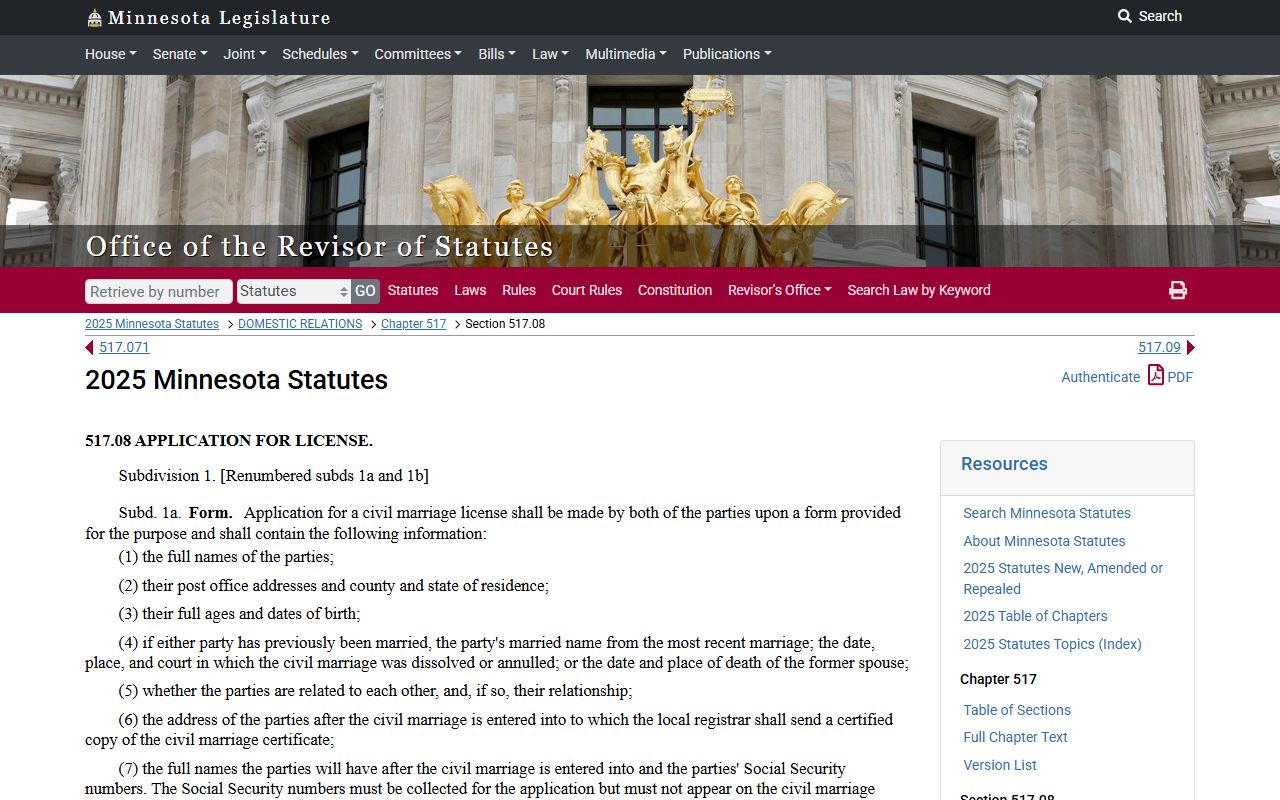
Section 517.08 sets the fee structure and application requirements. The standard fee is $115. If either applicant has completed a 12-hour premarital education course, the fee drops to $40. The education must be provided by a licensed minister, licensed therapist, or licensed marriage and family therapist. The educator must sign and notarize a statement on official letterhead that you bring to the recorder's office.
Under Minnesota Statute 517.01, marriage is a civil contract requiring consent, a license, a ceremony, and two witnesses who are at least 16 years old. The license is valid for 6 months from the date of issue and can be used anywhere in Minnesota. There is no waiting period. Minnesota eliminated the waiting period on August 1, 2016.
If either party was previously married, you must bring proof of how that marriage ended. A divorce decree or death certificate works. The recorder needs to confirm the previous marriage is legally terminated before issuing a new license.
Required items for a Minnesota marriage license application include:
- Valid photo ID for both applicants (driver's license, state ID, or passport)
- Social Security numbers for both applicants
- Full legal names, current addresses, and telephone numbers
- Date and place of birth for both parties
- Intended name after marriage for both parties
- Divorce decree or death certificate if previously married
- Premarital education certificate for reduced fee (optional)
Getting Certified Minnesota Marriage Records
To get a certified copy of a Minnesota marriage record, contact the county recorder where the license was issued. You can visit in person, call, or in many counties send a mail request. In-person requests are usually handled the same day. Mail requests can take a week or two depending on the county's workload.
The MDH county directory lists all 87 Minnesota county vital records offices with addresses, phone numbers, and websites. This is a useful reference when you need to find the right county office to contact.
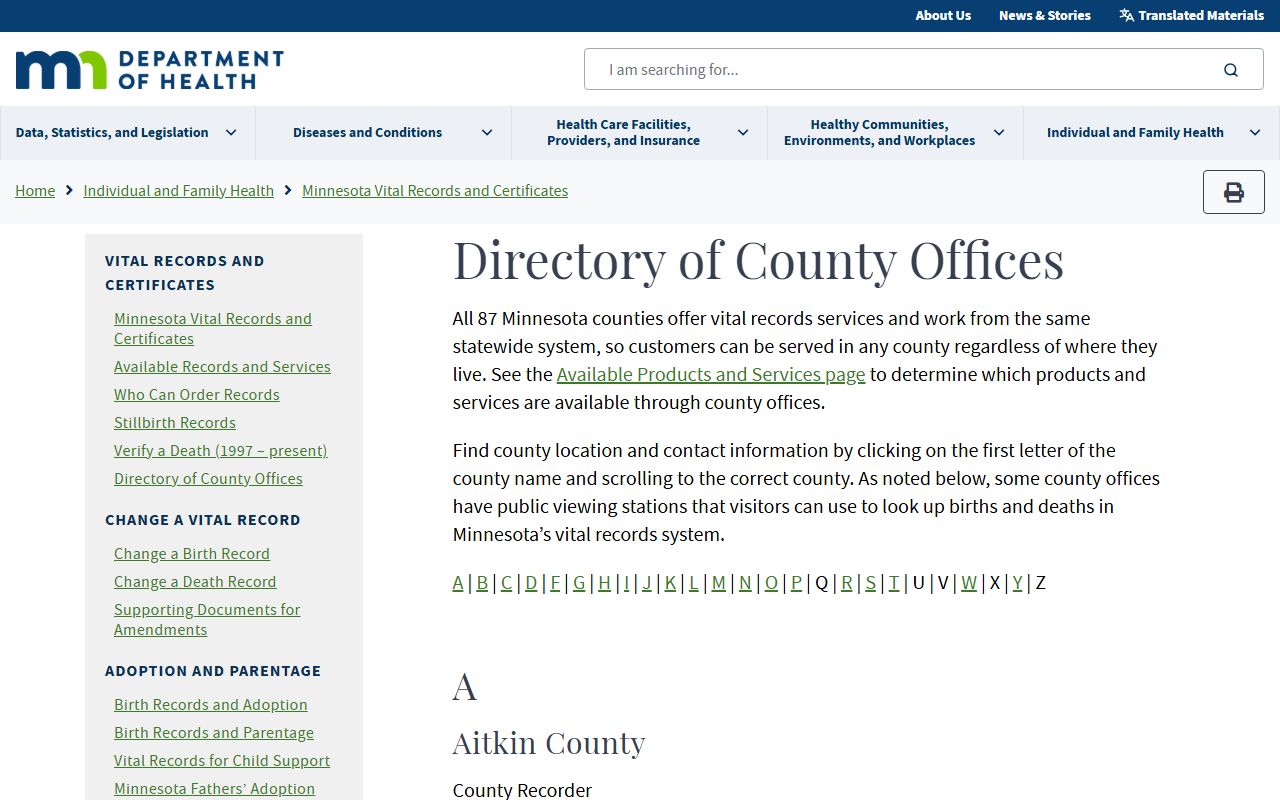
The county directory shows that some counties offer public viewing stations where you can look up records on-site. Others handle all requests by mail or at the counter. Fees and hours vary slightly by county, so calling ahead is a good idea before you make the trip.
Under Minnesota Statute 517.101, the local registrar (county recorder) must issue a certified copy of a civil marriage certificate upon request and payment of the fee. Most certified copies cost $9. Some counties like Anoka, Benton, Blue Earth, Chisago, Dakota, and Olmsted charge $125 for the license and have slightly different copy fee schedules. Always confirm the current fee when you contact the office.
Minnesota Marriage Laws and Statutes
All Minnesota marriage law is in Chapter 517 of the Minnesota Statutes. This chapter covers everything from who can marry to how the certificate gets filed. The chapter was last updated through SF 1409 from the 2025 legislative session.
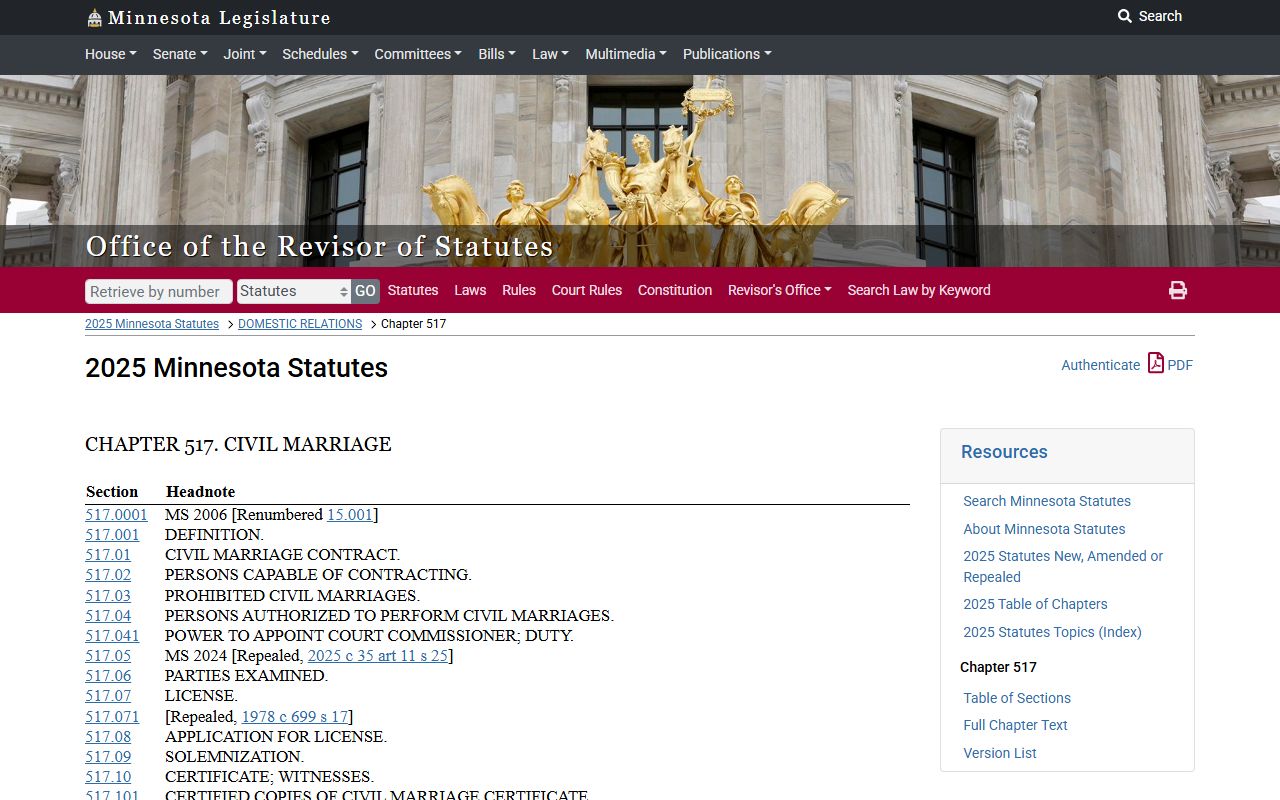
Key sections of Chapter 517 include: Section 517.01 defines marriage as a civil contract requiring consent. Section 517.03 lists prohibited marriages, including those between close relatives and anyone under age 18. Section 517.04 lists who can perform a marriage ceremony in Minnesota. Judges, court administrators, and licensed or ordained ministers all qualify. A private individual aged 21 or older can also register as a civil marriage officiant with any county recorder.
Under Minnesota Statute 517.10, the officiant must complete and sign the marriage certificate within 5 days of the ceremony. The certificate goes back to the county recorder who issued the license. That recorder then records it in the county civil marriage records. The certificate must include full names before and after marriage, birth dates, signatures of both parties, date and place of marriage, and the names of at least two witnesses.
The public's right to access marriage records flows from Minnesota Statutes Chapter 13, the Minnesota Government Data Practices Act. Marriage records are classified as public data. Anyone can request access without giving a reason. The only limitation is that records filed after 1997 may contain some restricted personal information, such as Social Security numbers and home addresses of minor children, which are redacted before public release.
If a marriage certificate contains an error, Statute 517.103 governs the amendment process. Both applicants must sign notarized statements, and supporting documentation must be provided to the county recorder. Corrections go through the recorder's office, not through the state.
Historical Minnesota Marriage Records
The Minnesota Historical Society marriage records guide is the best starting point for genealogy research. The Society holds original territorial marriage records dating to the 1840s. These early records cover the period before Minnesota became a state in 1858.
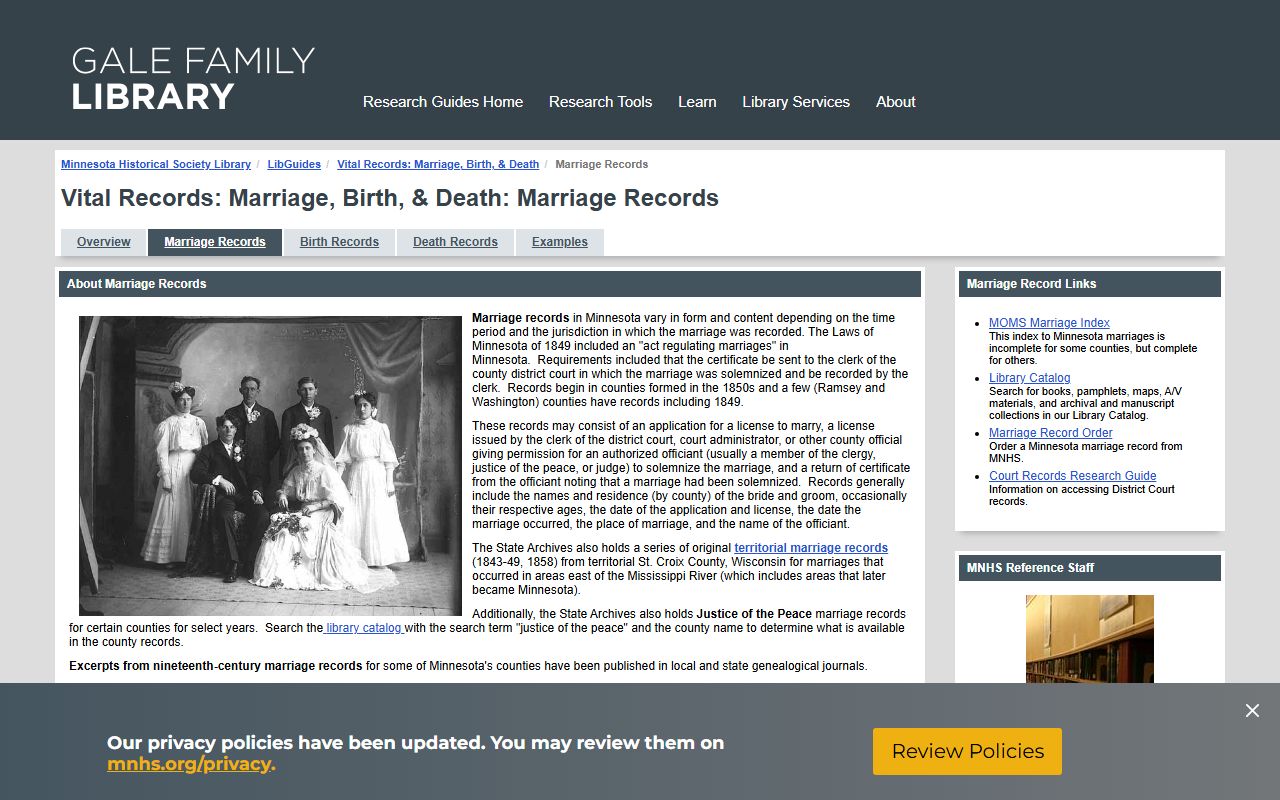
Early marriage records in Minnesota typically include the names of both parties, their county of residence, the date of the application, the date the ceremony took place, the place of marriage, and the name of the officiant. Some records also note the ages of the parties. Format and content varied by county and time period. Ramsey and Washington counties have records going back to 1849.
MOMS covers marriages from 1958 statewide, with many counties having earlier records in the system. The MNHS also maintains indexes to Minnesota marriages from 1849 to 1950, and county marriage records from 1860 to 1949 with images available. These historical databases are searchable through the MNHS website. For certified copies of any record, you still need to contact the county recorder directly; the Historical Society does not issue certified copies.
The MDH data request service offers compiled public vital records data for research purposes. Standard public birth and death files are available for $15 per report. This service is aimed at researchers who need aggregate data rather than individual record copies.
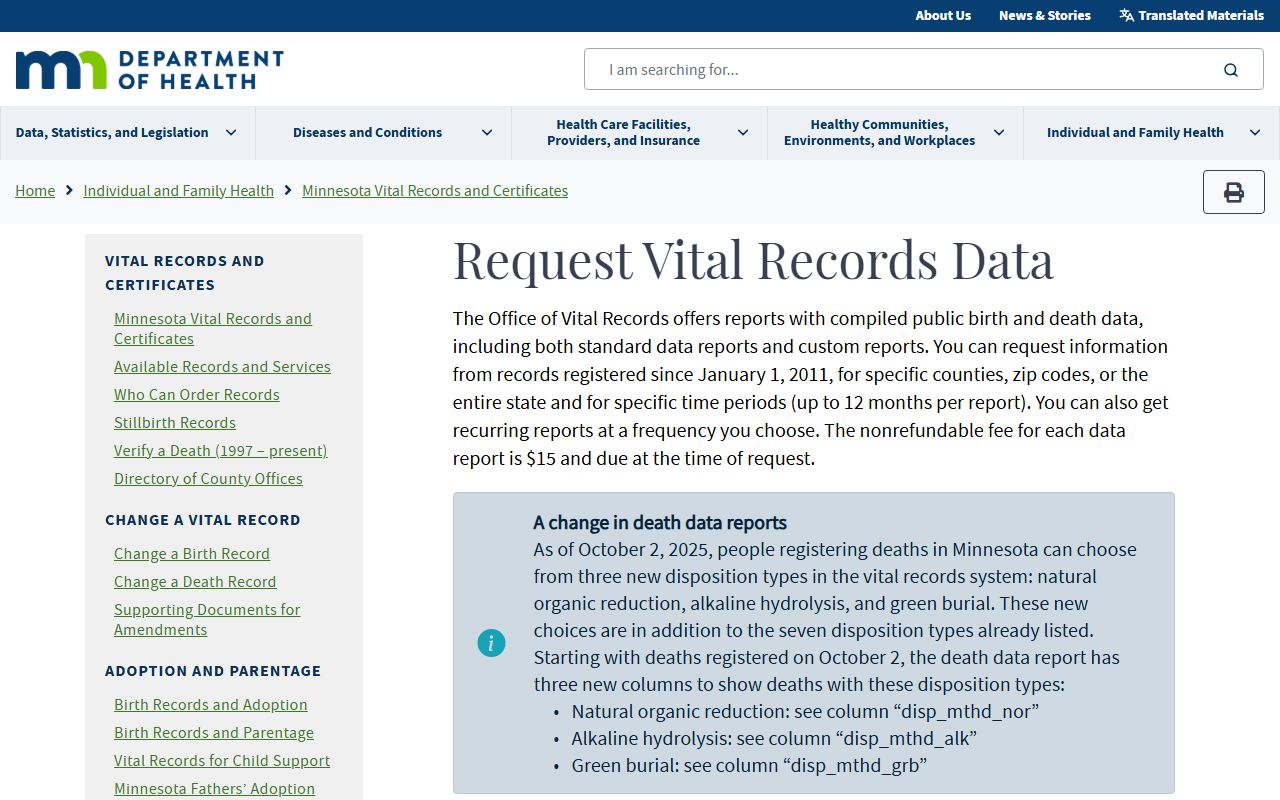
Researchers who need marriage data at scale can contact MDH about custom reports. Individual certificate searches, though, still go through the county recorder or MOMS system.
MACO and the MOMS Program
MOMS is managed by the Minnesota Association of County Officers (MACO). A steering committee of local registrars from all nine geographic districts in the state oversees the program. MOMS Coordinator Kristie Partain and the Core Team monitor the system and track legislative changes that affect how marriage records are managed.
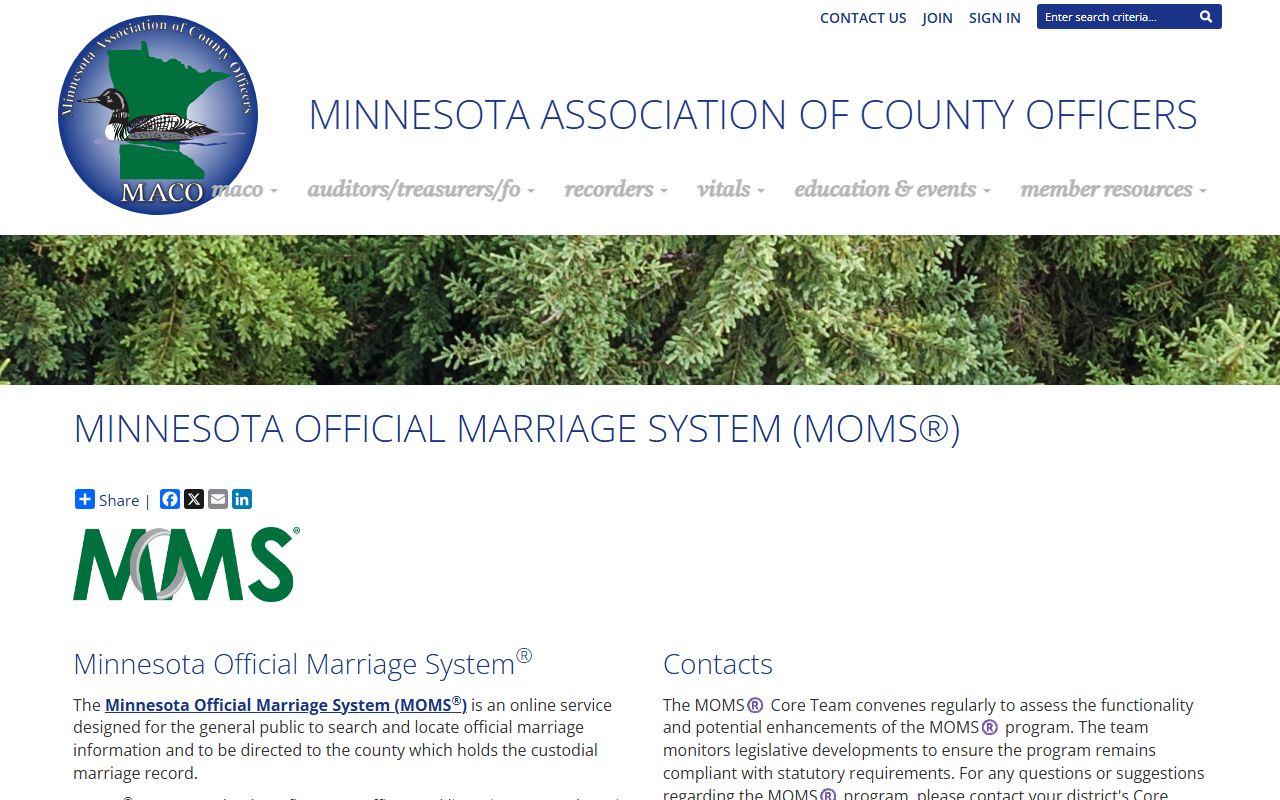
MOMS is supported by user fees, not state appropriations. The program also oversees DADS, the Discharge Access Database System, a statewide index of military discharge records. MOMS was the first county-run marriage database of its kind in the country. Counties are not required to submit records to MOMS, but all 87 do participate. Data accuracy is the responsibility of each individual county.
When searching MOMS and not finding a record, a few things may explain it. Search with less information first. Drop the date range and try just a name. Check spelling variations using the Soundex option. Some counties may have gaps in older data. If a search in MOMS comes up empty, contact the county recorder directly for records going back before the county's earliest indexed date in the system.
Judicial Branch and Marriage Ceremonies
The Minnesota Judicial Branch plays a role in marriage in several ways. District court judges and court administrators are authorized under Statute 517.04 to perform wedding ceremonies. Several county district courts offer civil marriage ceremonies at the courthouse, including Hennepin, Ramsey, and St. Louis counties. Ramsey County District Court offers civil ceremonies and makes arrangements directly with judges for date, time, and fee details.
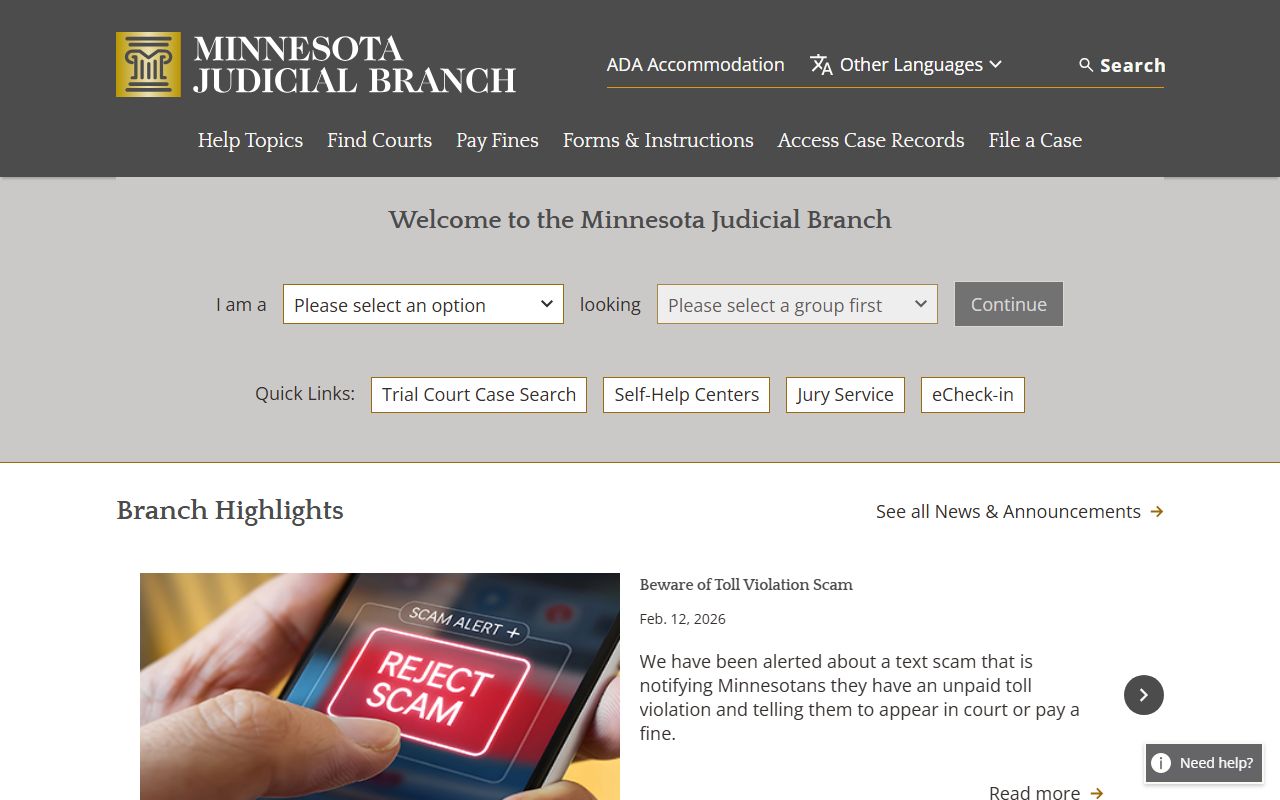
The courts also handle divorce and legal separation. Divorce records are maintained by district courts rather than county recorders. If you need a divorce decree or dissolution judgment, contact the district court in the county where the case was filed, not the county recorder. The two systems are separate. Marriage licenses and certificates go through recorders. Divorce records go through the courts.
Public Access to Minnesota Marriage Records
Marriage records in Minnesota are public data under Chapter 13 of the Minnesota Statutes. Anyone can request access to marriage records. You do not need to be a party to the marriage, a relative, or an attorney. The county recorder must provide access upon request and payment of any applicable fee.
The MDH vital records processing page explains how the state handles request timelines for various vital records. While MDH does not process marriage records itself, its processing information page gives useful context about how Minnesota approaches vital records statewide.
For most Minnesota counties, in-person requests at the recorder's office are handled the same day. Mail requests typically take one to two weeks. Some counties also accept faxed or emailed requests for information, though certified copies require original processing. Records after 1997 may have some restricted personal data redacted, but the core marriage information remains public.
Browse Minnesota Marriage Records by County
Each of Minnesota's 87 counties has its own recorder office that handles marriage licenses and maintains marriage records. Pick a county below to find local contact details, fees, and specific resources for marriage records in that area.
View All 87 Minnesota Counties
Marriage Records in Major Minnesota Cities
Minnesota cities do not issue marriage licenses. All licenses come from the county recorder. Find the right county office for major Minnesota cities by clicking a city below.